
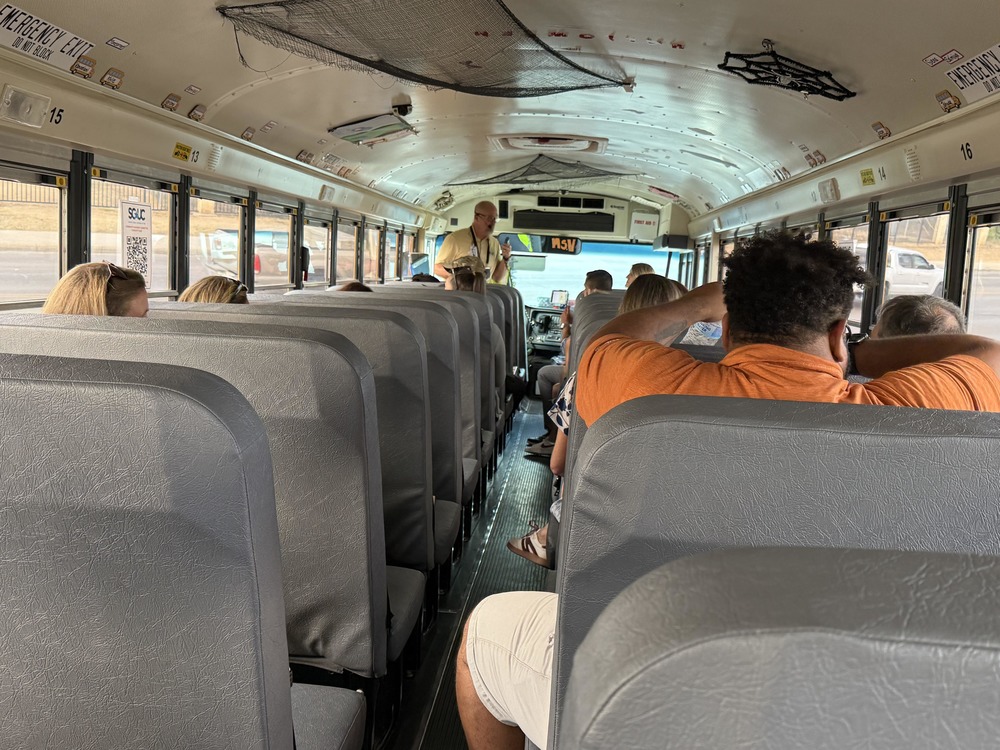
During an October 8 facilities bus tour, SCUC ISD’s Community Advisory Committee visited Dobie Junior High, Wilder Intermediate, and Watts Elementary to see firsthand how aging infrastructure, limited space, and outdated features impact students and staff as part of the district’s transparent bond planning process.
Members of the Schertz-Cibolo-Universal City ISD (SCUC ISD) Community Advisory Committee (CAC) observed firsthand the impact of aging facilities during a district bus tour on October 8, focused on campuses that may be considered for improvement through a possible bond referendum. The tour included Dobie Junior High School, Wilder Intermediate School, and Watts Elementary School.
The CAC split into two buses to tour campuses and hear directly from district leadership. One bus, led by Superintendent Paige Meloni and Deanna Jackson, Executive Director of Communications and Community Relations, visited Wilder Intermediate School, Watts Elementary School, and Dobie Junior High School. A second bus, led by Assistant Superintendent Kelly Kovacs and Chief Operations Officer JD Mosley, began the tour at Dobie, a campus originally built in 1974 and last renovated in 2015.
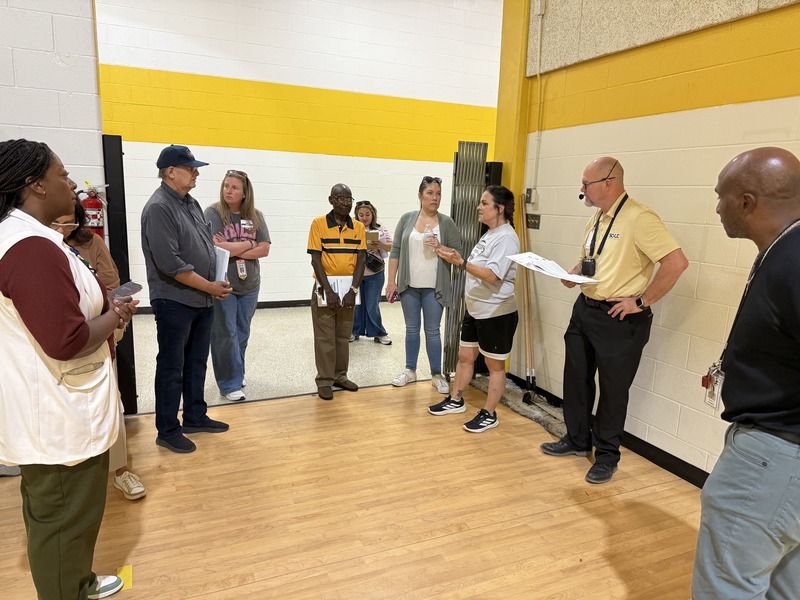
At Dobie Junior High School, committee members noted limited and repurposed athletic spaces, including former locker rooms and shower areas now used for student activities. The campus also features classrooms without windows, a grass athletic field in poor condition, and a cafeteria with mismatched tile and terrazzo flooring.
“It was never expected to have a weight room,” said Mosley, referring to Dobie’s transition from an intermediate to a junior high campus. “So where do we find a space? An old locker room with a shower—and here we are.”
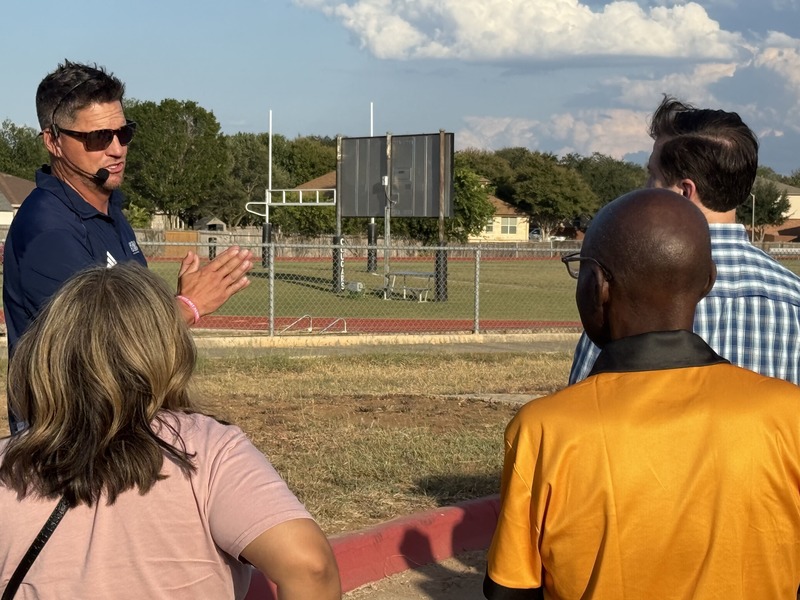
SCUC ISD Athletic Director Scott Lehnhoff guided the group through Dobie’s athletic facilities, pointing out safety concerns on the field.
“Notice between the hashes,” Lehnhoff said. “There are dips and holes—lots of ankle-twisters. It could definitely use some work.”
Committee members also toured classrooms currently serving as choir and orchestra spaces, which are smaller and less equipped than similar facilities at other secondary campuses. Behind the main building, the area between the campus and portable classrooms is commonly referred to as “Lake Dobie,” as heavy rain frequently makes the pathway impassable between class periods.
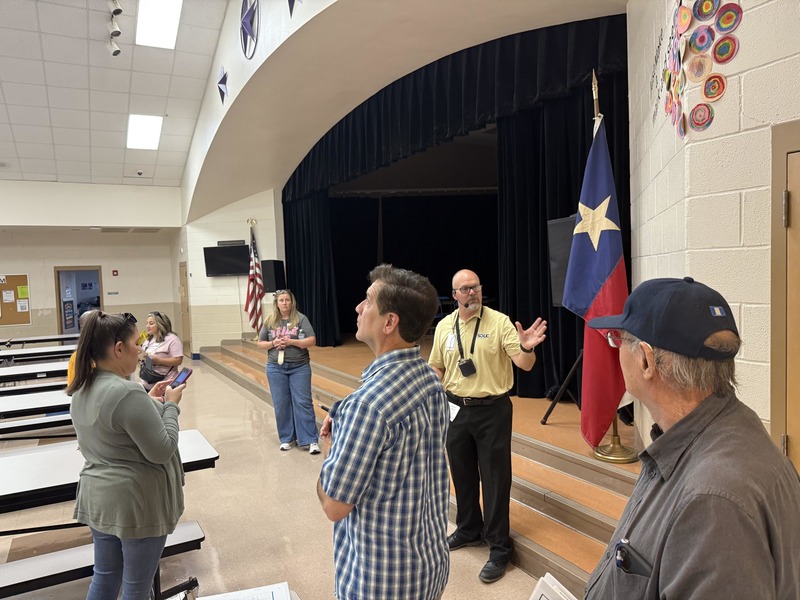
Karissa Tidwell, a CAC member and third-grade teacher at Paschal Elementary School, emphasized the importance of equitable learning environments.
“Some of these buildings aren’t up to code anymore, and they’re ugly,” Tidwell said. “Our kids deserve great learning spaces—not just for academics but for extracurriculars, too. We need to foster that.”
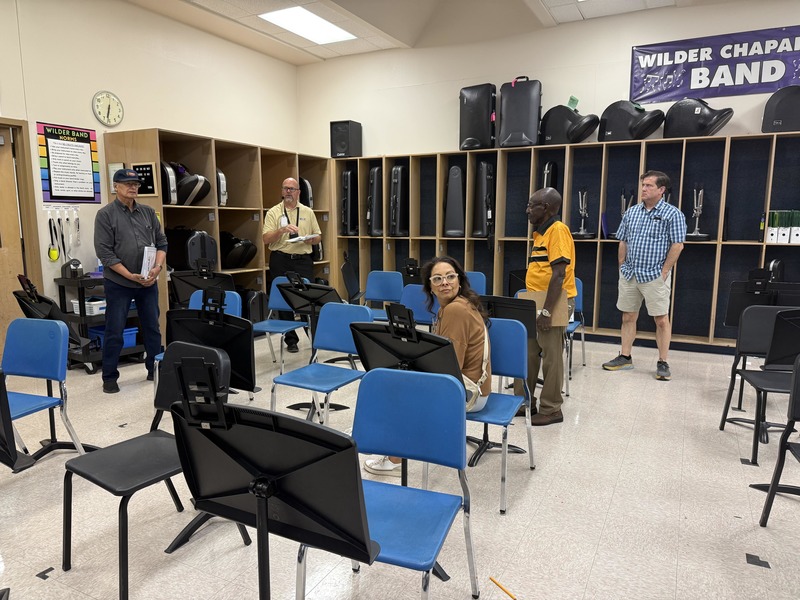
At Wilder Intermediate School, built in 1996 with an additional wing added in 2015, committee members observed narrow hallways, outdated restrooms, and limited instructional space. The campus currently relies on a portable classroom for choir and uses a small orchestra room with minimal storage. The library still has its original mini blinds, now nearly three decades old.
Yessica Marks, whose children attend Rose Garden Elementary School and Corbett Junior High School, said the tour provided important perspective.
“I had no idea these schools were so outdated,” Marks said. While acknowledging that a bond could result in a tax increase, she emphasized the importance of functional facilities. “We want them to have air conditioning that works, no leaks, and furniture that’s not falling apart.”
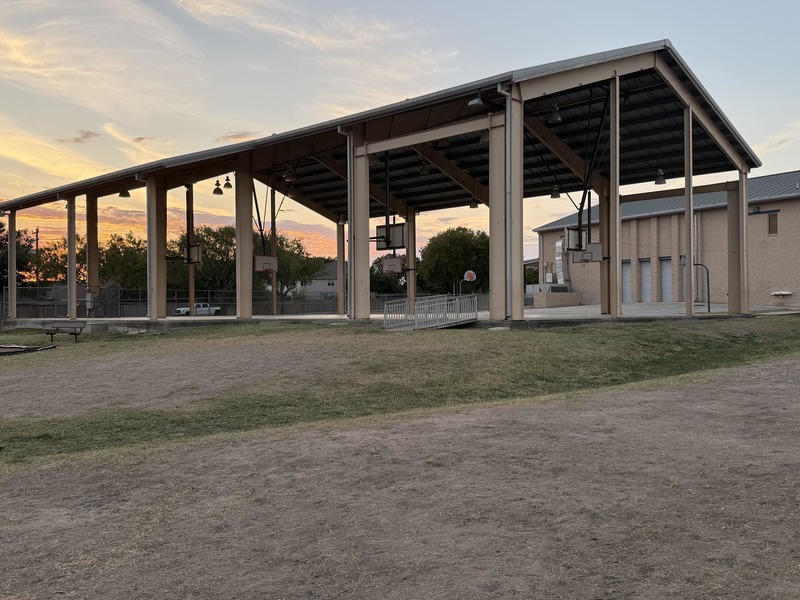
The final stop on the tour was Watts Elementary School, which opened in 1999. Many of the same concerns seen at Dobie and Wilder were present, along with playground equipment that is now more than 26 years old. A distinctive campus feature known as the “hot breezeway” serves as the sole access point for grounds crews to reach the courtyard for maintenance.
“We want our students and families to feel proud of the schools they attend,” said Tidwell. “We’re doing the best we can, but there’s a lot that can be done to make every building the best it can be.”
Learn more about the Community Advisory Committee and view the presentation from the October 6 meeting below.
October 6, 2025 Presentation
Community Advisory Committee Page